BEGINNER GUIDE TO BASKETBALL CARD BREAKS
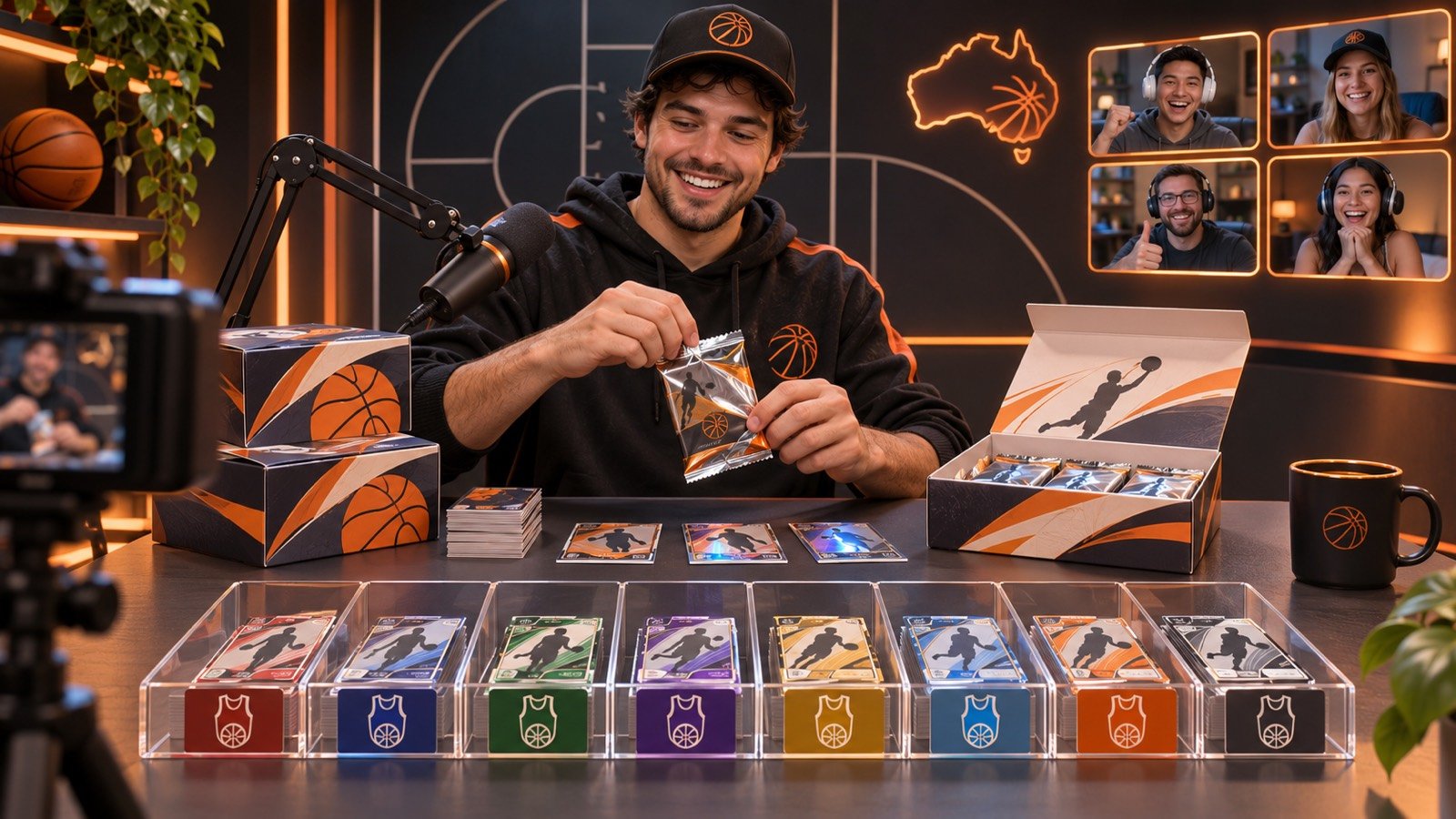
Quick answer: a basketball card break is a group opening of sealed card boxes or packs. Instead of one person buying the entire product, collectors purchase spots linked to teams, players, divisions or packs. The breaker opens everything live, sorts the cards according to the published rules and ships each participant the cards assigned to their spot.
Breaks can be exciting, social and a cheaper way to access premium boxes, but they do not guarantee a valuable card. If your goal is one exact player, parallel or rookie, buying a single is normally the more predictable choice. This guide explains both options so you can decide before the countdown starts.
New to the card terminology itself? Read our basketball card types guide first. If you already have a card and want to price it, use the Australian card value guide.
What is a basketball card break?
A breaker buys sealed card product, advertises the product and allocation method, sells the available spots, then opens the cards during a livestream. A spot is not usually a promise of one particular card. It is a right to receive whatever cards match the team, player, division, pack or draft position attached to that spot.
For example, in a pick-your-team NBA break you might buy the San Antonio spot. You would normally receive the Spurs cards pulled from the advertised boxes. If the boxes contain no Spurs cards, your result depends on the platform rules and the breaker’s published hitless policy. Never assume every spot receives a hit.
The basic process
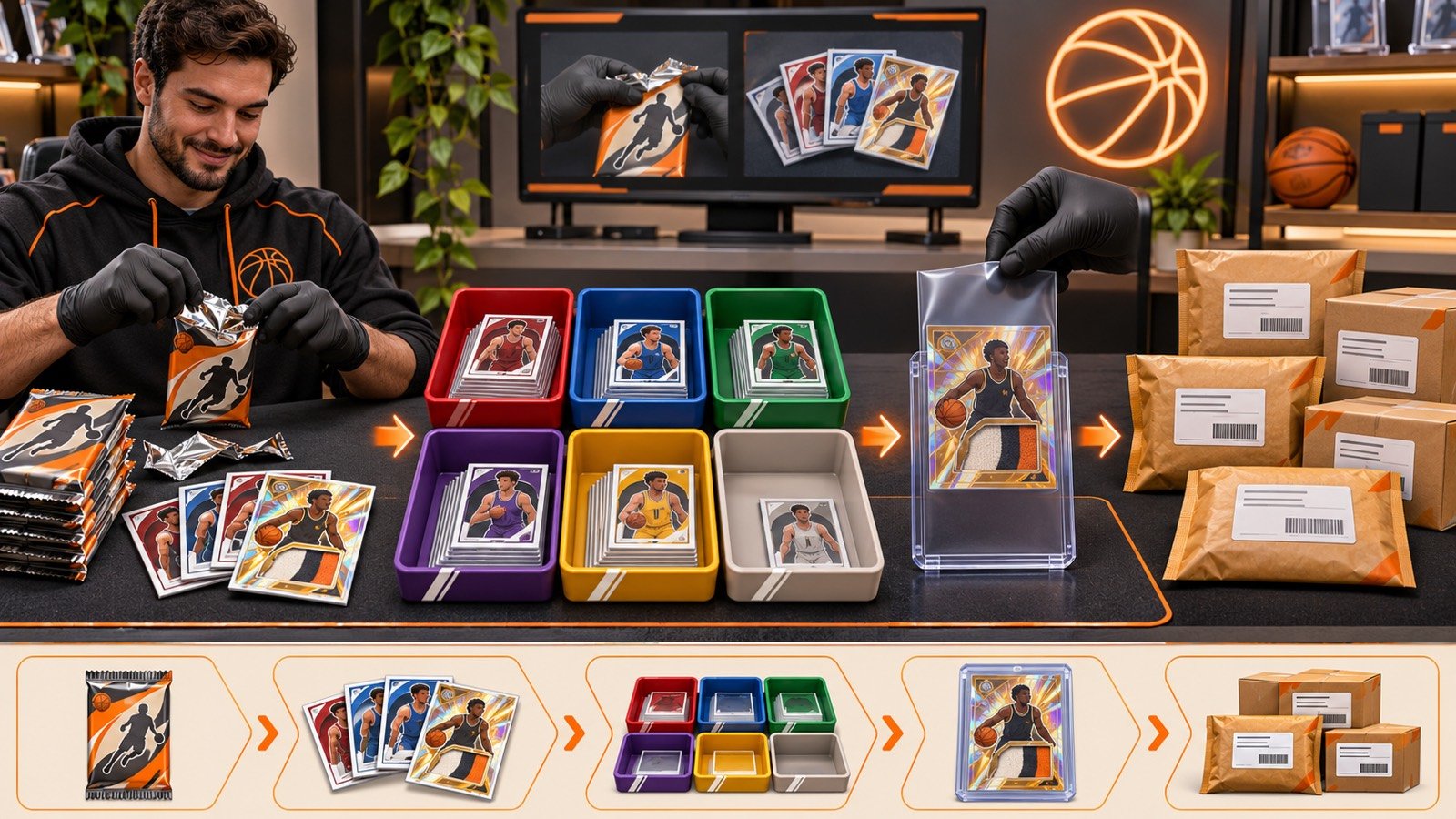
1. The breaker shows the sealed products and publishes the format. 2. Collectors buy spots. 3. Any random teams or players are assigned using the stated process. 4. The product is opened live and remains visible. 5. Cards are sorted under the break rules. 6. The breaker protects and ships the cards to each buyer.
Read the full listing before buying. Check exactly which boxes are included, whether base cards ship, how multi-team cards are decided, what happens to cards with no current NBA team and whether postage is included or charged separately.

Card breaks versus buying singles
Neither choice is automatically better. They solve different collecting goals. A break is entertainment plus uncertain card allocation. A single is a direct purchase of a known card.
Choose a break when
you enjoy the live show, understand the format, can afford to receive little value back and want access to products that would be expensive to open alone.
Choose singles when
you want a particular player, rookie, set, grade or parallel and want to compare the exact card’s condition and recent sales before paying.
Choose a sealed box when
you want every card from the product, enjoy opening it yourself and accept the full cost and uncertainty.
A useful rule for beginners is to decide what you are paying for. If you are paying for entertainment, set a firm entertainment budget. If you are paying to build a player collection, compare the cost of the spot with the singles you could buy for the same amount.
Types of basketball card breaks
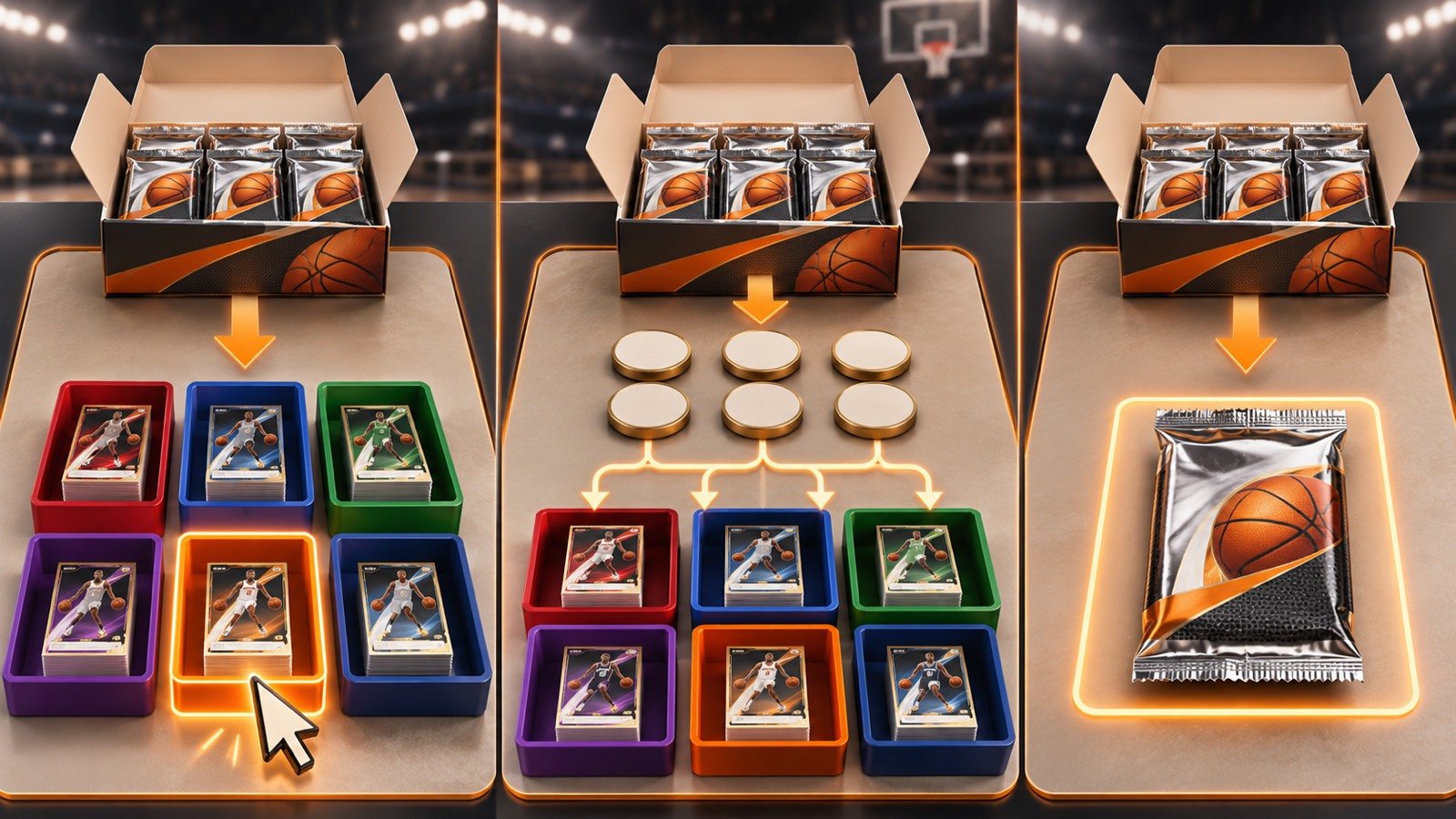
Pick Your Team (PYT)
You choose a specific NBA team and receive the cards assigned to that team. Popular teams and teams with major rookies often cost more. PYT gives you control over the team but not over which cards appear.
Random Team
Everyone buys a spot at the same or similar price, then teams are randomly assigned. It can make expensive teams accessible, but you may receive a team you do not collect.
Random Division or Conference
Spots cover several teams, such as an NBA division or conference. There are fewer spots and usually a higher price per spot, but each buyer has more teams represented in the break.
Random Player
Each spot is assigned one player from a published list. This format may involve many spots and can be difficult to assess unless the checklist and player list are available before purchase.
Pick Your Player
You choose a named player and receive that player’s eligible cards. Pricing varies sharply because a superstar or top rookie can have much stronger checklist coverage than a role player.
Pack Break
You buy a specific pack from a box. The pack may be opened live or, if the seller offers it, shipped sealed. You normally receive the entire purchased pack rather than cards sorted by team.
Hit Draft
A fixed number of hits are revealed, then participants select cards in draft order. The draft order may be bought or assigned. Read how the order is determined and confirm every spot is guaranteed a card.
Personal or Rip and Ship
One buyer purchases a full pack, box or other sealed product. The seller opens it live and ships the contents to that buyer. This is not a shared team break, but it uses the same livestream opening experience.
Box, Case and Mixer Breaks
A box break opens one box, a case break opens a sealed case and a mixer combines products from different years or sets. More product creates more cards, but it does not guarantee that every team or player will hit.
Repack Break
The breaker opens repackaged cards assembled by a seller or repack company rather than manufacturer-sealed packs. Check the floor, ceiling, checklist, card condition and who produced the repack. Repack values require extra scrutiny.
What does a break spot actually include?
A spot includes only what the listing and rules say it includes. The spot price may reflect the cost of the sealed product, the number of teams or players, expected checklist strength, platform fees, supplies, sorting, postage and the breaker’s service. It is not a guaranteed fraction of the product’s resale value.
Hitless spots and base cards
Some team spots will not produce a valuable card and may not appear in the opened product at all. Whatnot’s current card-break policy says every buyer must receive at least one card for each break purchase, including formats where the assigned team does not appear. eBay explains that a particular team or player is not guaranteed to appear and sellers may have different hitless or consolation policies. Check the live listing because platform and seller rules can change.
Multi-team cards and retired teams
Cards showing multiple teams need a declared rule. A breaker might assign the card to the team with the majority of players, use the team named on the card, run an approved random assignment or use another published method. The same applies to relocated franchises, national teams and players pictured in a college uniform.
Shipping, sleeves and insurance
Confirm whether postage is included, combined across shows or charged for each order. Ask how hits, numbered cards and autographs are protected. For expensive cards, understand whether tracking and insurance are included and who handles a damage or missing-parcel claim.
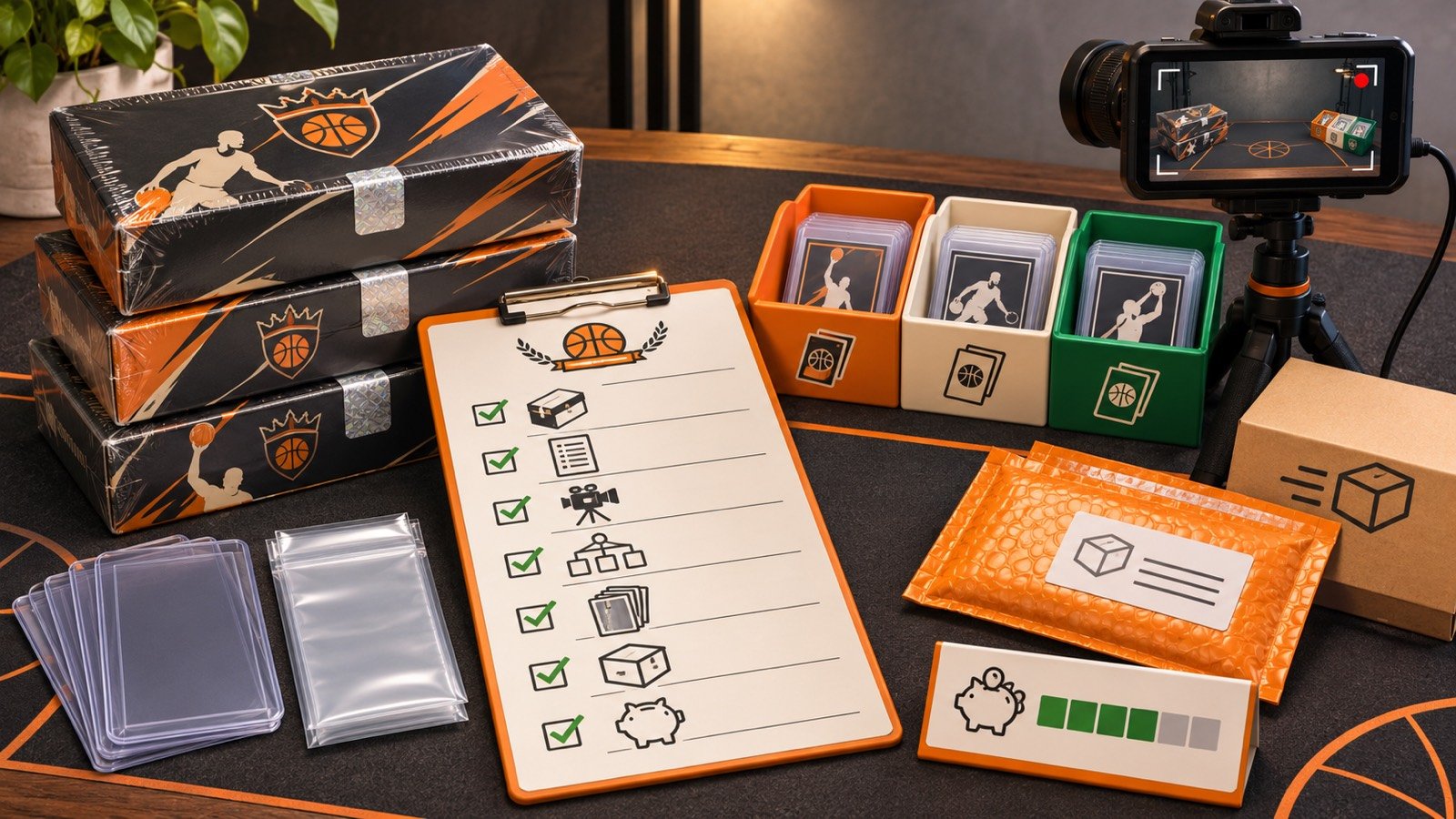
How to choose a breaker and protect your budget
- Read the complete product list and confirm that the boxes are factory sealed.
- Understand whether you are buying a team, player, division, pack or draft position.
- Check the rules for base cards, multi-team cards, points, redemptions and hitless spots.
- Watch how the breaker keeps packs and cards visible, sorts cards and protects hits.
- Review feedback, shipping history and how the seller responds when something goes wrong.
- Compare the spot price with the price of singles you genuinely want.
- Set a session limit before bidding and do not chase a previous loss with another spot.
- Save the listing or rules until your cards arrive and check the parcel promptly.
Sports Card Warriors does not guarantee sellers or break outcomes. Use our Aussie Breakers and Sellers directory to discover Australian profiles, then do your own checks on the platform before buying. A “profile claimed” badge confirms control of the directory profile, not a financial guarantee.
Find Aussie breakersCard breaks on Whatnot and eBay Live
Whatnot breaks
Whatnot supports common formats including random spots, Pick Your Team, hit drafts and pack breaks. Spots may be sold by auction or at a fixed price depending on the format. Whatnot requires the rules to be available, the break to remain visible and every buyer to receive at least one card per card-break purchase. Always read the current policy and show notes because platform rules evolve.
Join Sports Card Warriors on WhatnoteBay and eBay Live breaks
eBay now offers card breaks through eBay Live and marketplace listings. eBay says break spots may represent teams, players or divisions and can be sold at a fixed price or by auction. Break sellers must be pre-approved, and eBay Live break activity is subject to visibility and listing requirements. Availability and features can vary by country and event.
The live module below searches current eBay Australia listings using our affiliate tracking. Sports Card Warriors may earn a commission from qualifying purchases at no extra cost to you. A listing appearing here is not an endorsement, so read its rules before buying.
Loading current eBay Australia listings…
Frequently asked questions
Do you keep every card from your team in a break?
Usually you receive cards that match your assigned team under the published rules, but some breaks do not ship all base cards. Multi-team cards, points, redemptions and cards without a current team need separate rules. Read the listing before buying.
Can you get nothing from a card break?
You may receive no cards from the actual opened product if your team or player does not appear. Current platform rules may require a card or consolation shipment, but that does not mean the spot will return its purchase price.
Are breaks cheaper than buying a box?
One spot normally costs less than the entire box or case, but you receive only the cards assigned to that spot. Buying several spots can quickly approach or exceed the price of singles or sealed product.
What is the best break format for beginners?
Pick Your Team is easiest to understand because you choose the team, while a pack break is simple because you receive one complete pack. Random-team formats may be cheaper for premium teams but offer less control.
Are card breaks gambling?
A break involves paying for an uncertain card outcome, so buyers should treat the spend as entertainment and follow local laws and platform rules. This guide does not provide legal advice. Never spend money needed for bills or chase losses.
How do I know whether a spot price is fair?
Check the exact product cost, number of spots, checklist strength, team odds, shipping and the value of singles you could buy instead. There is no guaranteed return. Use recent sold data rather than the biggest possible hit.