BEGINNER COLLECTOR GUIDE
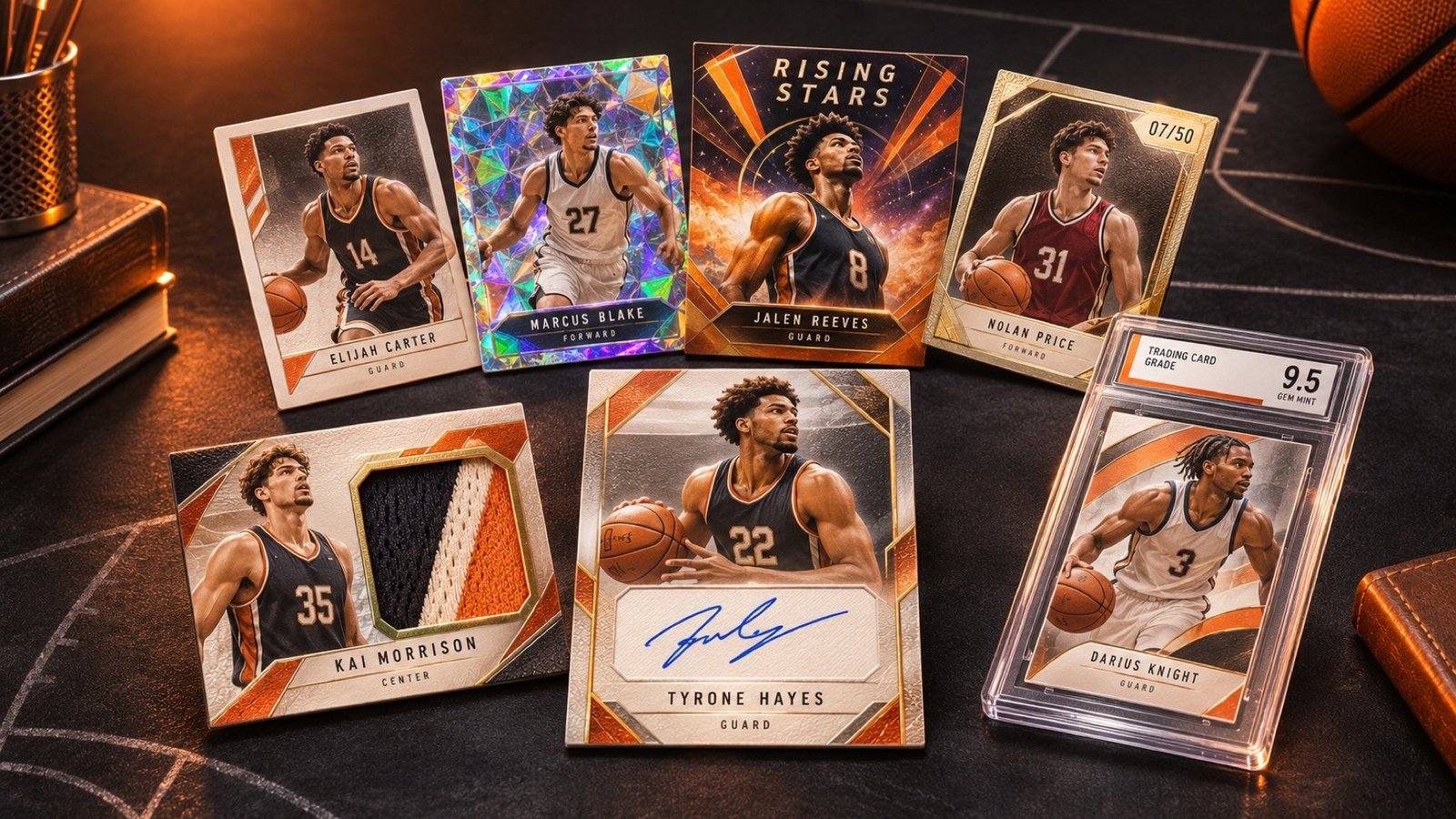
If you are new to basketball cards, the hobby can feel like a different language. A single product might contain base cards, colour parallels, short prints, numbered cards, autographs, patches and inserts. Some look almost identical while having very different rarity and value.
This guide explains the main basketball card types in plain English, shows how to tell them apart and gives you a practical process for identifying an unfamiliar card. The short answer is that a base card is the standard version in a set, a parallel is an altered version of that same card, an insert belongs to a separate themed subset, a numbered card has a stated print run, an autograph is signed and a relic contains material such as jersey fabric.
Last reviewed: November 2026
Basketball card types at a glance
These are the terms you will see most often in product descriptions, checklists, live breaks and online listings.
Base card
The normal, standard card that forms the main numbered set.
Parallel
A variation of a base card with a different colour, pattern, finish or material.
Insert
A separately designed themed card that sits outside the main base set.
Numbered card
A card stamped with its individual copy and total print run, such as 23/99.
Autograph
A card signed by the player, either directly on the card or on an applied sticker.
Relic or memorabilia
A card containing a piece of material, often a jersey or other sports-related item.
Patch
A premium relic featuring a thicker or more distinctive piece of fabric, sometimes with multiple colours.
Rookie card
A player’s officially recognised card from their rookie season, usually marked with an RC logo.
Short print
A card made in lower quantities than ordinary cards, sometimes without a printed serial number.
Graded card
A card authenticated, assessed and sealed in a tamper-evident holder by a grading company.
Base cards, parallels and inserts
What is a base card?
A base card is the standard version of a card in the main set. If a release has a 250-card checklist, cards numbered 1 to 250 normally form the base set. Base cards usually share the same overall design and are the most common cards found in packs.
Base does not automatically mean worthless. A base rookie of a superstar can still be desirable, especially in a respected product or high grade. However, modern base cards are generally printed in larger quantities than parallels, inserts, autographs and numbered cards. That greater supply usually keeps prices lower.
To recognise a base card, check the card number on the back and compare it with the official product checklist. If the design matches the standard version and there is no special colour, finish, serial stamp or variation note, it is probably the base card.
What is a parallel card?
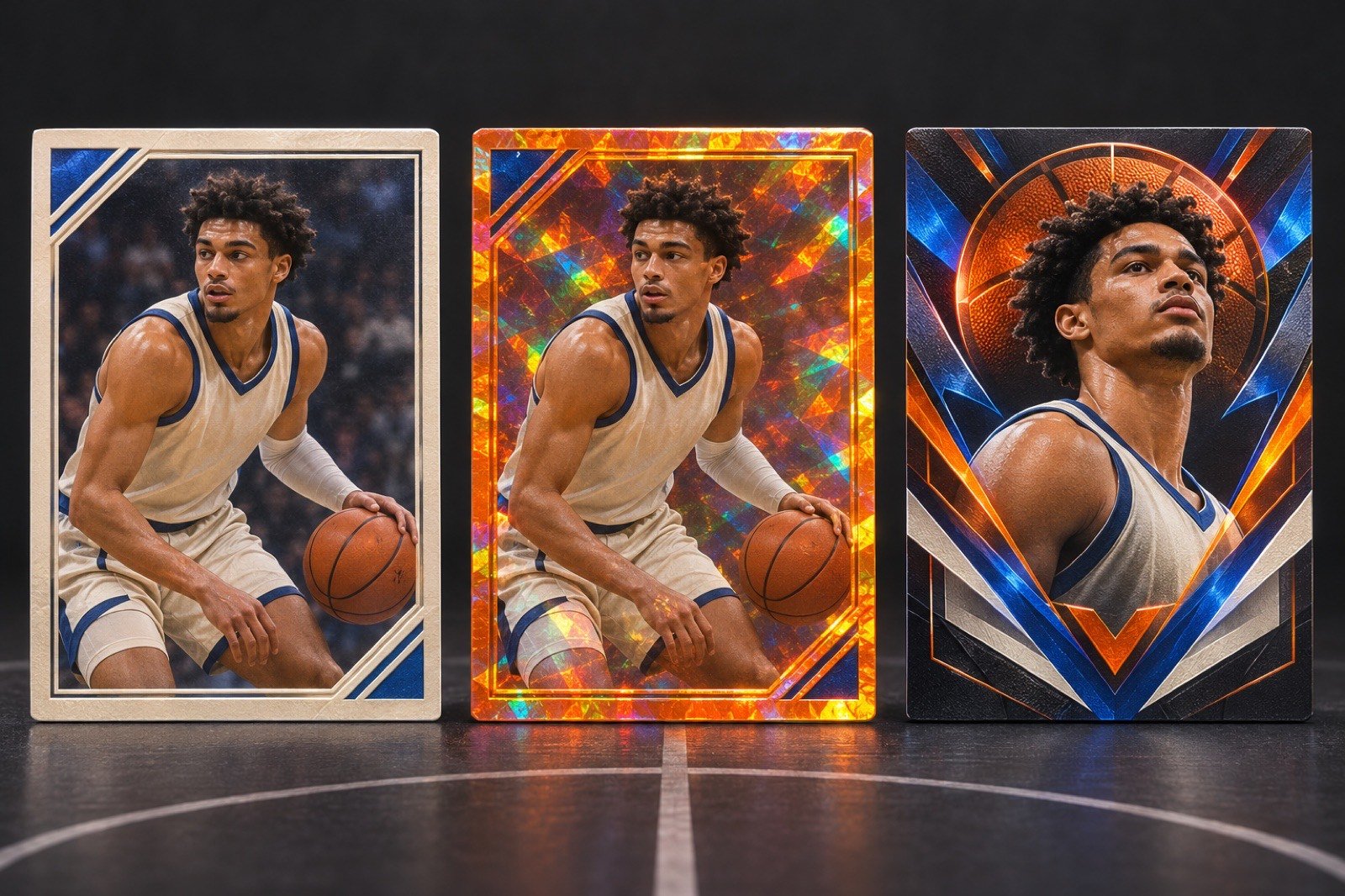
A parallel is an alternative version of a base card. It normally uses the same player photograph and card number but changes part of the appearance. The difference might be a coloured border, foil pattern, refractor-style shine, cracked-ice effect, special background, different card stock or another finish.
Many parallels are serial numbered, but not all of them are. A silver or rainbow foil parallel may be unnumbered while a gold version could be numbered to 10. This is why colour alone does not tell you the exact rarity. You need the checklist and, when present, the serial stamp.
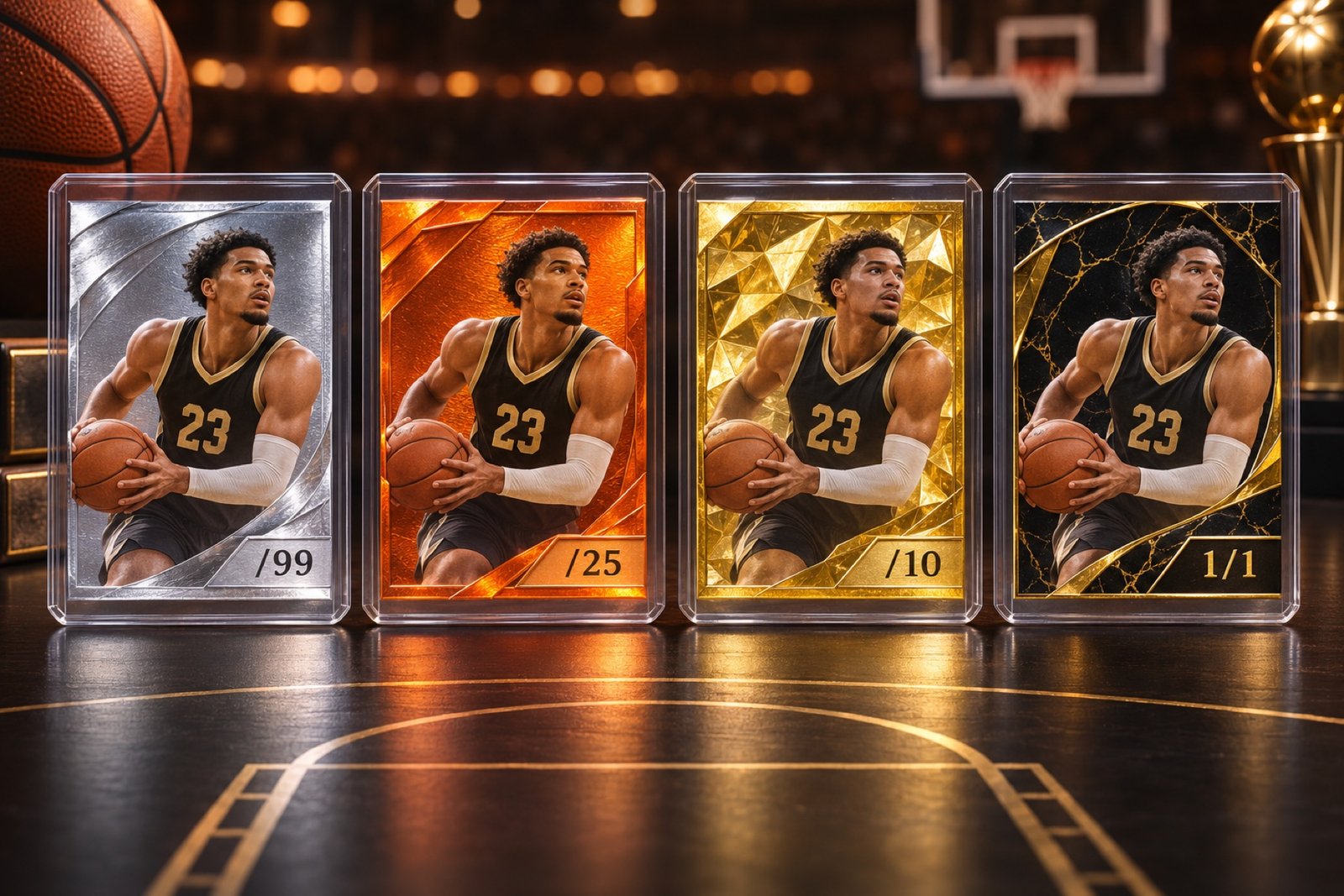
Manufacturers often create a parallel rainbow, which is the full family of colour and pattern variations for one base card. Collectors who chase every version of a player are called rainbow collectors. A rainbow can range from common unnumbered colours through cards numbered to 99, 25, 10, 5 and finally a one-of-one.
What is an insert card?
An insert belongs to a separately designed theme within the product. It may celebrate a skill, milestone, nickname, era or visual concept. Inserts usually have their own checklist and often their own card-number prefix. For example, a base card might be number 87 while an insert could be numbered SS-12.
The easiest way to remember the difference is this: a parallel is another version of the same base card, while an insert is a different card design and subset. Inserts can also have their own parallels, so you may find a base insert, a silver insert parallel and a numbered gold insert parallel.
Numbered cards, short prints and one-of-ones
What is a serial-numbered card?
A serial-numbered card has its print run stamped or printed on the card. A stamp of 23/99 means you have copy 23 from a total production run of 99 copies. The number after the slash is the important scarcity figure. Card 1/99 is not rarer than card 62/99 because both belong to the same 99-card run.
Certain individual numbers can attract extra interest. Collectors may pay more for the first copy, the final copy or a number matching the player’s jersey. That preference is called a bookend or jersey-number premium, but it is buyer dependent and should not be treated as a guaranteed price increase.
Numbered cards are useful because their stated supply is known. Even so, low supply does not guarantee high value. Demand for the player, product, design and card condition still matters. A card numbered to 25 of a little-collected player can sell for less than an unnumbered card of a global superstar.
What are SP and SSP cards?
SP means short print and SSP means super short print. These cards are produced less often than standard cards, but the exact quantity may not be printed on the card. They can be image variations, alternate designs or special inserts that appear at difficult pack odds.
Manufacturers sometimes publish odds or checklist notes that reveal an SP or SSP. In other cases collectors identify them through card numbers, code differences, repeated box openings and market evidence. Never rely only on a seller using the words rare or short print. Confirm the card through the official checklist or a trustworthy hobby reference.
What is a one-of-one card?
A one-of-one, written as 1/1, has only one officially produced copy of that particular version. It can be a premium parallel, autograph, patch, printing plate or another special card. Because there is no identical second copy, exact comparable sales may not exist.
A 1/1 is unique, but uniqueness alone does not set the price. The player, brand, eye appeal, autograph quality, patch quality and strength of the buyer market still decide what someone will pay. When valuing one, look at similar one-of-ones of the same player and comparable cards from the same product tier.
What is a printing plate?
Printing plates are the metal plates used during parts of the card-production process. Sets may release cyan, magenta, yellow and black plates as one-of-ones. They are genuinely scarce, but some collectors prefer traditional card stock and do not value plates as highly as a main 1/1 parallel.
Rookie cards, autographs, relics and patches
What is a rookie card?
A rookie card is an officially recognised card from a player’s rookie season. Modern licensed cards commonly display an RC logo. Rookie cards matter because they capture the beginning of a professional career and are often the versions collectors remember most.
Not every early card is the same. A player can have prospect cards, collegiate cards, draft cards, pre-rookie cards, digital cards and cards from unlicensed products before or around their official rookie cards. Collectors may still enjoy those cards, but they should not automatically be advertised as the player’s main licensed rookie card.
The phrase true rookie is commonly used for a player’s regular base card in the main set, rather than an insert. Usage varies between collectors and products, so be specific in listings. State the year, product, card number and whether the card is base, parallel or insert.
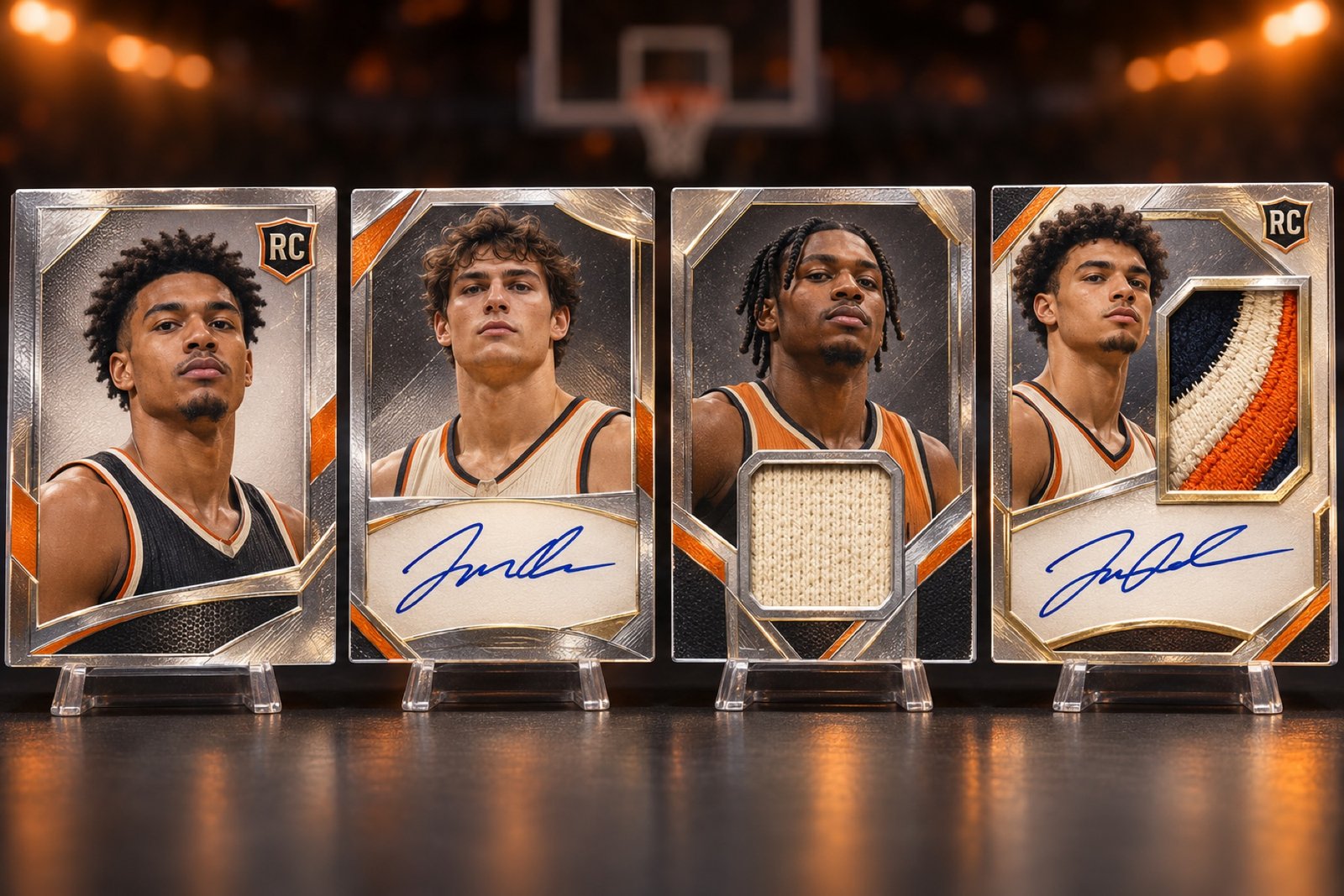
What is an autograph card?
An autograph card contains a player’s signature and is normally guaranteed or authenticated by the card manufacturer when it is pack issued. There are two major types: on-card autographs and sticker autographs.
An on-card autograph is signed directly on the card surface. Many collectors prefer it because the player physically handled the card and the signature feels integrated into the design. A sticker autograph is signed on a clear label that is later applied to the card. Sticker autos allow manufacturers to prepare signatures earlier and use them across products.
Check the signature placement, ink strength and whether it runs off the sticker or signing area. Also read the wording on the back. A random card signed later in person is different from a manufacturer-issued autograph card and may require independent authentication.
What is a relic or memorabilia card?
A relic card contains a piece of material embedded in the card. It may be described as memorabilia, jersey, swatch, fabric, ball, shoe or another item. The exact wording matters. Some material is player worn, some is game used and some is not associated with a specific game, event or player.
Do not assume every jersey-looking swatch was worn in an NBA game. Turn the card over and read the manufacturer’s statement. That small text is the best description of what the material represents.
What is a patch card?
A patch card is a relic card containing a thicker or more visually distinctive section of material. Multi-colour patches, stitching, lettering and logo sections often receive more attention than a plain single-colour swatch. A great-looking patch can add desirability, but the card’s stated provenance still matters.
What is an RPA?
RPA means rookie patch autograph. It combines a rookie-year card, a patch and a player autograph. RPAs are among the signature cards of premium basketball products because they bring three popular elements together. Important differences include on-card versus sticker signatures, patch quality, serial numbering, product prestige and whether the memorabilia wording confirms player or game use.
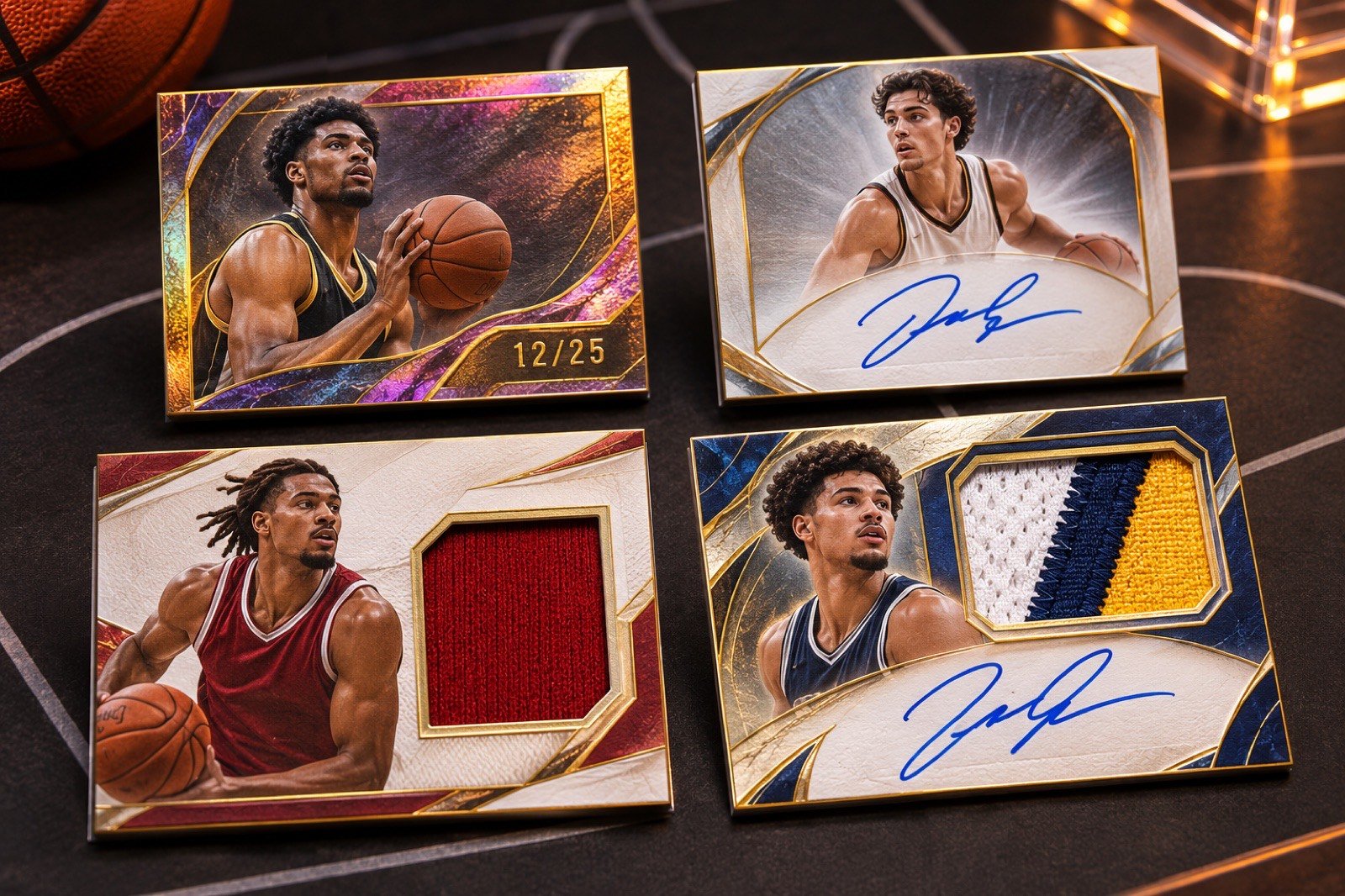
Case hits, variations and other hobby terms
What is a case hit?
A case hit is a special card expected to appear around once per sealed case, although actual odds and case configurations vary. The term describes insertion frequency, not a guarantee that every case contains one. Case-hit inserts are often bold, recognisable designs that become popular targets for collectors.
Some sellers loosely call any desirable insert a case hit. Check the manufacturer information or published pack odds before accepting that label. A visually dramatic card can still be a normal insert.
What is an image variation?
An image variation uses a different photograph from the regular card while often keeping the same card number and much of the same design. Variations can be SP or SSP cards. Compare the image, card-back codes, checklist notes and known examples.
What are acetate, die-cut and lenticular cards?
Acetate cards use a clear or translucent plastic-like stock. Die-cut cards are cut into a custom shape rather than a standard rectangle. Lenticular cards create movement or depth when tilted. These describe the card’s construction or visual technology, not necessarily its rarity.
What is a redemption card?
A redemption is a placeholder that can be exchanged with the manufacturer for a card that was not ready when packs were produced. Redemptions often represent autographs. They have deadlines and fulfilment conditions, so check the manufacturer’s current policy before buying an unredeemed code. Never share a readable redemption code publicly.
What is a reprint?
A reprint recreates an older card design at a later date. Official reprints can be legitimate collectables, but they are not the original card. Check the copyright date, set details and markings. If an old-looking card is priced far below expectations, verify it carefully before buying.
Graded cards and what affects value
What is a graded card?
A graded card has been submitted to a third-party grading company for authentication and condition assessment. It is sealed in a labelled holder commonly called a slab. The label identifies the card and displays the assigned grade.
A grade can make condition easier to compare, protect the card and improve buyer confidence. It does not make every card valuable. Grading fees, postage, turnaround time, the grading company and the likely final grade all affect whether submission makes financial sense.
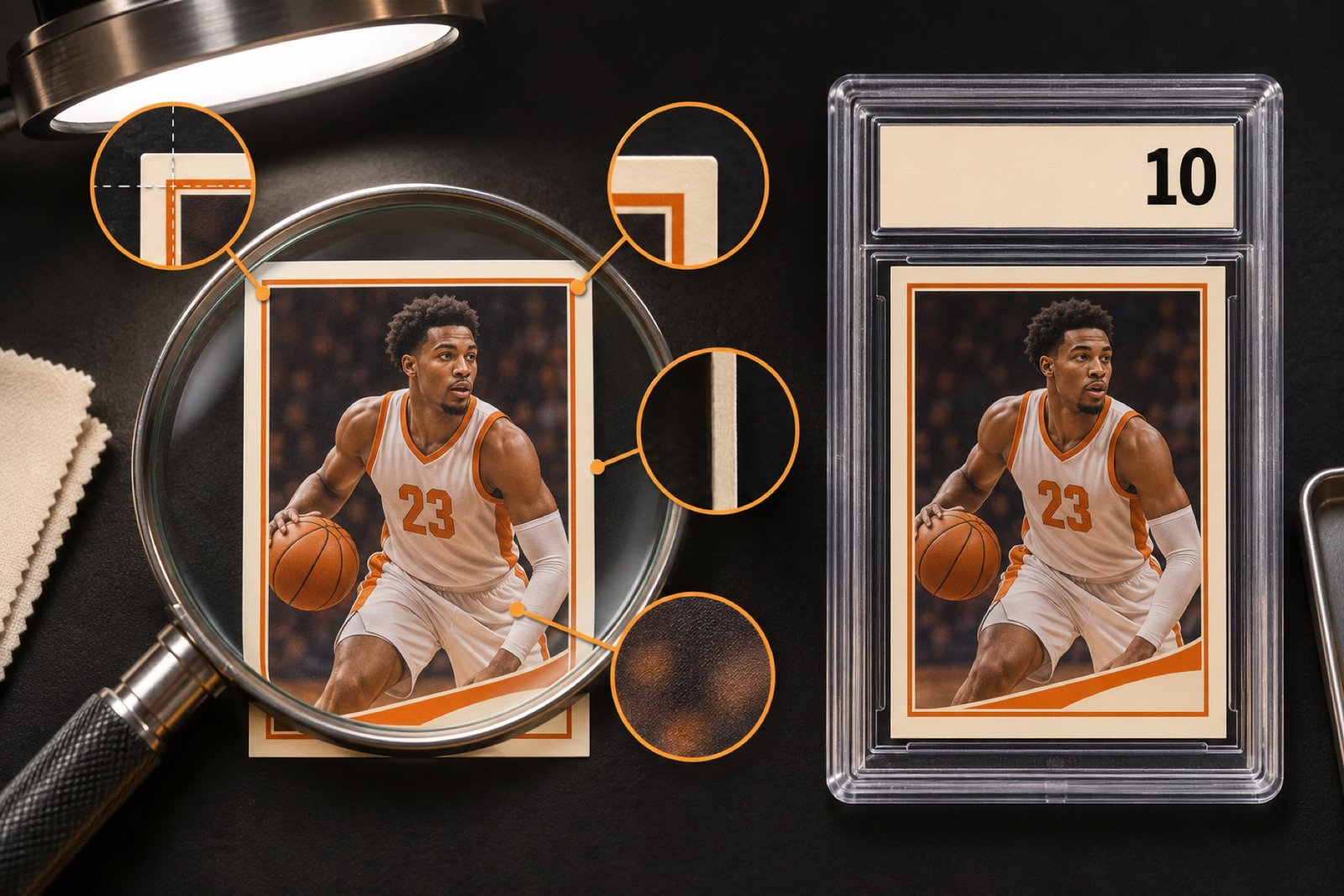
The main condition areas
- Centering: how evenly the printed design sits within the card borders.
- Corners: whether the corners are sharp or show whitening, bends or wear.
- Edges: whether the edges are clean or show chipping and damage.
- Surface: whether the front and back have scratches, dents, print lines, stains or marks.
- Authenticity and alteration: whether the card is genuine and has not been trimmed or improperly changed.
What actually makes a basketball card valuable?
Value is the result of supply meeting demand. Rarity is only one part. A useful evaluation considers the player, card type, product, year, condition, visual appeal and current collector interest.
- Player demand: superstars, exciting rookies and respected legends usually have broader markets.
- Scarcity: serial numbering, short-print odds and one-of-one status can limit supply.
- Card significance: a key rookie, iconic insert or recognised flagship card can attract long-term interest.
- Condition: clean raw cards and strong grades are easier to sell than damaged examples.
- Product reputation: collectors often pay more for established brands and premium sets.
- Eye appeal: colour match, photography, patch quality and autograph placement can separate similar cards.
- Timing: injuries, trades, awards, playoff runs and hype can move demand quickly.
Use sold results, not ambitious asking prices, when researching value. Match the exact year, set, card number, parallel, serial range, autograph or relic type, grade and condition. If exact sales do not exist, use the closest sensible comparisons and leave room for uncertainty.
How to identify an unknown basketball card
When you find a card you do not recognise, use this order. It prevents common mistakes and makes price research much faster.
- Find the player name and team. Check both sides because some multi-player cards list extra names on the back.
- Find the year and manufacturer. The small copyright line on the back is often the best clue.
- Identify the product or set. Look for names such as Prizm, Select, Donruss, Optic, National Treasures or another release.
- Record the card number. Include any letters, prefixes or subset codes.
- Compare the card with the official checklist. Decide whether it is base, parallel, insert or variation.
- Look for a serial number. Check the front and back for a fraction such as 14/49.
- Read the authentication and memorabilia wording. Confirm whether an autograph is guaranteed and how the material is described.
- Assess condition under good light. Check centering, corners, edges and surfaces before comparing prices.
- Search sold listings using the exact details. Add the year, product, player, card number, parallel and serial range.
- Verify visually. Make sure the sold card has the same colour, pattern, image, numbering and card-back details.
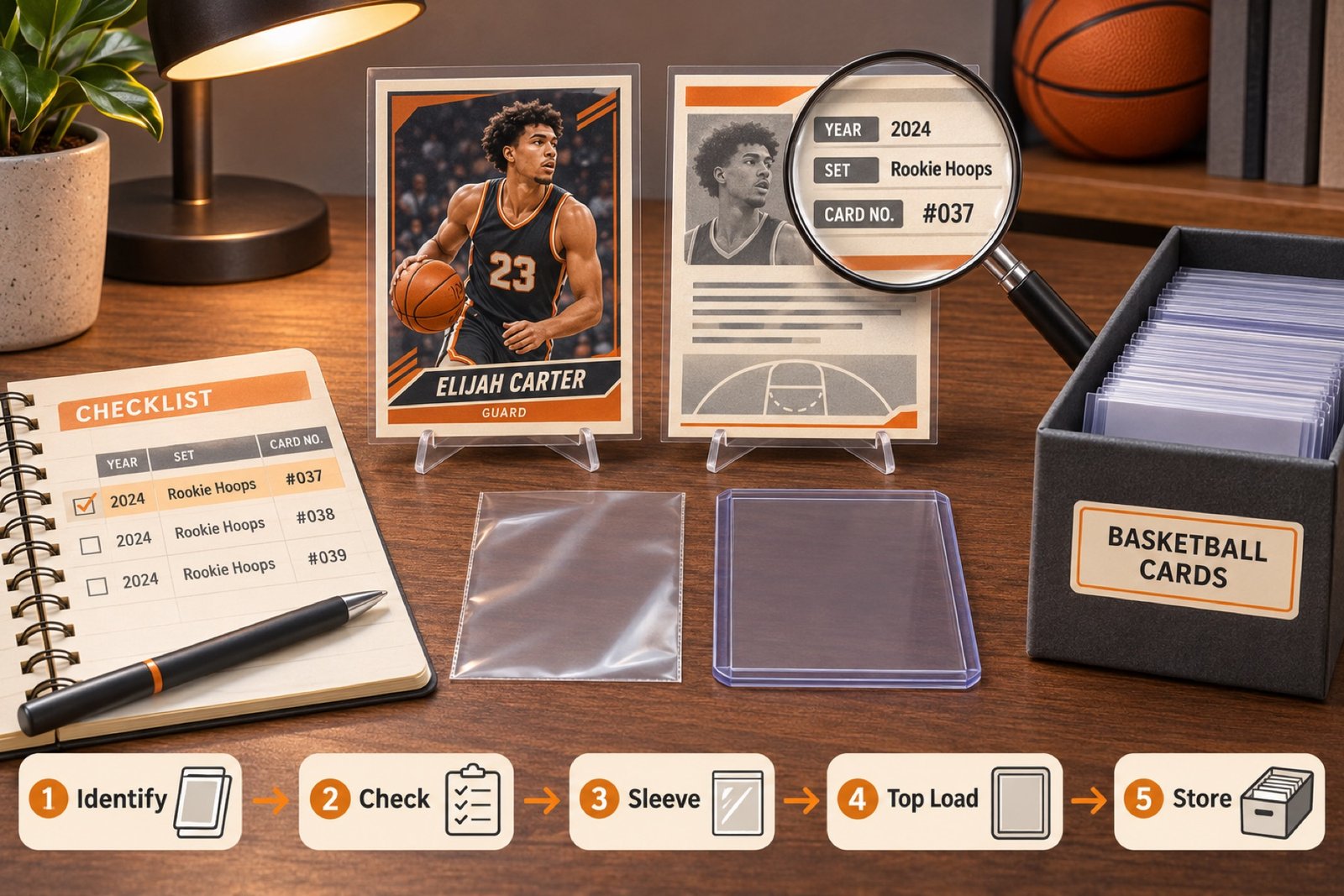
A practical search example
Instead of searching for “Steph Curry shiny card,” use a structured query such as “2023-24 Panini Prizm Stephen Curry #154 Orange Ice.” If it is numbered or graded, add “/99” or the grade. Precise searches remove unrelated cards and make the results more useful.
How to store the cards you find
Put ordinary cards in clean penny sleeves. Add a top loader or semi-rigid holder for better cards. Thick relics need the correct holder thickness so the edges are not crushed. Keep cards away from moisture, direct sunlight, extreme heat and dirty surfaces. Never force a thick card into a standard top loader.
For valuable cards, consider a team bag over the holder and a storage box that keeps cards upright without excessive pressure. Handle cards by the edges and wash and dry your hands before sorting. Gloves are not normally necessary and can reduce control.
SEE THE DIFFERENCE IN THE MARKET
See these card types on eBay
Use the live examples below to practise identifying rookies, parallels, numbered cards, autographs and patches. Compare the exact year, set, card number, parallel and condition before buying.
Loading current eBay Australia listings…
Affiliate disclosure: Sports Card Warriors may earn a commission from qualifying eBay purchases at no extra cost to you. These are active listings and asking prices, not confirmed sold prices.
Keep exploring Sports Card Warriors
Put what you have learned into practice, follow the community and find more tools made for basketball card collectors.
Frequently asked questions
Are all parallel cards numbered?
No. Some parallels are unnumbered and identified only by their colour, pattern or finish. Others have a serial stamp such as /199, /25 or /5. Check the product checklist to identify the exact version.
Is a numbered card always better than an autograph?
No. Card type alone does not decide value. A desirable autograph of a superstar may be worth more than a low-numbered card of a player with limited collector demand. Compare the player, product, condition, scarcity and recent sales.
Are patch cards always game worn?
No. A patch describes the look or type of material, not automatically its history. Read the statement on the back to learn whether the material is game used, player worn or not associated with a specific player, game or event.
What does colour match mean?
Colour match describes a parallel whose colour suits the player’s team colours, uniform or card design. It can improve eye appeal and collector demand, but it is an informal hobby preference rather than an official rarity level.
What is the difference between raw and graded?
Raw means the card is not sealed in a third-party grading holder. Graded means a grading company has authenticated and assessed it. A raw card can be excellent, while a slabbed card can have a low grade, so inspect the actual condition and label.
Should beginners buy boxes or single cards?
Singles are usually the most direct way to obtain a specific player or card. Boxes provide entertainment and the possibility of hits, but the contents are uncertain. Set a budget before opening packs and treat the experience as entertainment rather than guaranteed profit.
Where can I check the official card type?
Start with the manufacturer’s checklist and product information. Then compare trusted hobby references and clear photographs of both sides. Marketplace titles are useful clues but can contain mistakes.
What is the best card type to collect?
The best type is the one that fits your goal and budget. Base rookies are accessible, parallels add colour and scarcity, inserts offer distinctive designs, autos connect you to the player and relics provide a tangible sports element. You do not need the rarest card to build a meaningful collection.
YOUR NEXT STEP
Learn the card, then decide if you would stash or pass
Use the checklist above whenever you see an unfamiliar card. Once you know exactly what it is, compare real market information, consider the player and decide whether it belongs in your collection.
Explore Stash or PassSources and further reading
Use these official resources to check hobby terminology and understand how professional grading standards work. Product details can vary, so always check the manufacturer checklist for the exact set you are collecting.
2 thoughts on “Basketball Card Types Explained: Base, Parallels, Numbered Cards, Autos and More”